
Choosing between an automatic and manual transmission can shape your driving experience, ownership costs, and everyday comfort. Both systems transfer engine power to the wheels, but they give drivers different levels of involvement in controlling the vehicle.
An automatic transmission handles gear changes for you, while a manual transmission requires you to operate a clutch pedal and select gears yourself. That difference becomes especially noticeable during heavy traffic, hill starts, and long commutes.
Neither option suits everyone. The right choice depends on your budget, driving environment, experience, and preferences. Understanding the advantages and limitations of each transmission will help you select a car that fits your daily needs.
How Does a Manual Transmission Work?
A manual transmission lets the driver choose gears using a gear lever and clutch pedal. Pressing the clutch temporarily disconnects the engine from the transmission, allowing you to change gears before smoothly reconnecting power.
Drivers coordinate the clutch, accelerator, and gear lever when moving away or changing speed. This takes practice, particularly when starting on slopes or navigating slow traffic.
Once learned, the process can become natural. Many drivers enjoy the direct involvement and ability to decide exactly when the vehicle changes gears.
How Does an Automatic Transmission Work?
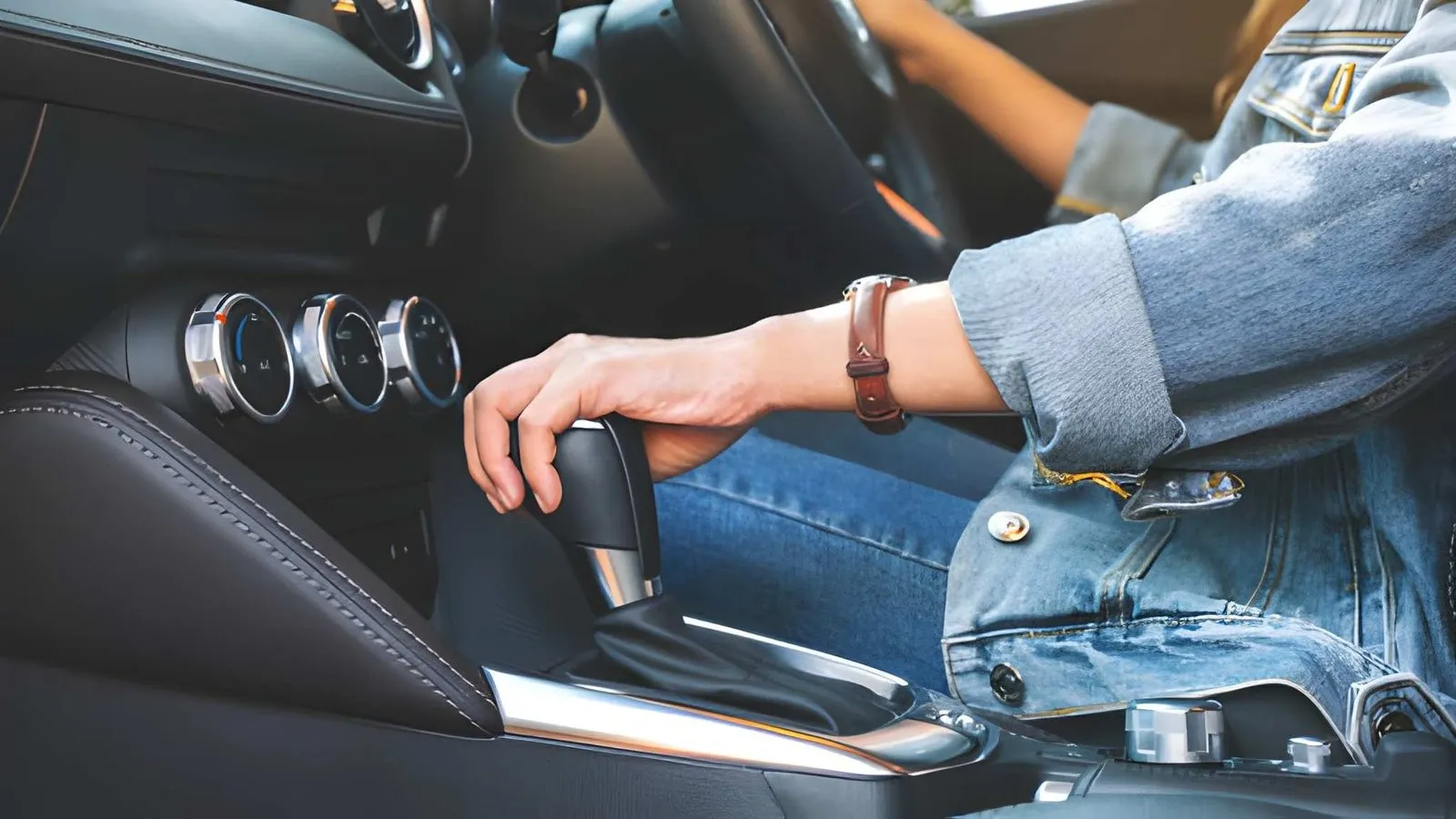
An automatic transmission selects suitable gear ratios based on factors such as vehicle speed, engine load, and accelerator input. The driver generally selects Drive, Reverse, Neutral, or Park without operating a clutch pedal.
However, automatic transmissions come in different designs. Conventional automatics, continuously variable transmissions, dual-clutch systems, and automated manuals can feel different during acceleration and low-speed driving.
Some also offer paddle shifters or a manual selection mode. These features allow additional input, although the transmission may still override selections to protect its components.
Ease of Driving and Learning
For many beginners, an automatic is easier to learn because it removes clutch coordination and routine gear selection. This can make early lessons feel less demanding and leave more attention available for steering, positioning, and observing traffic.
Manual cars require more practice. Learners may stall, select an unsuitable gear, or struggle with smooth starts while developing coordination.
However, learning manual operation provides a useful additional skill. If you expect to drive different vehicles regularly, knowing both systems can increase your flexibility. Check local licensing requirements before deciding which transmission to learn.
Comfort in Traffic and on Long Journeys
Automatic cars are particularly convenient in stop-and-go traffic. Repeatedly moving forward requires less footwork because there is no clutch pedal to press each time traffic slows.
A manual transmission can become tiring on congested routes, especially when frequent stops demand repeated clutch operation. Drivers with certain mobility limitations may also find an automatic more comfortable, depending on their needs.
On open highways, the difference often becomes smaller. A manual car may remain in its highest suitable gear for extended periods, while an automatic continues managing changes as conditions vary.
Fuel Efficiency: Which Uses Less Fuel?
The assumption that manual cars always use less fuel is outdated. Modern automatic transmissions can match or exceed the fuel economy of comparable manual versions. Improvements in transmission design and gear selection have helped close the historical gap. Department of Energy
However, transmission type alone does not determine fuel consumption. Vehicle weight, engine design, traffic conditions, maintenance, and driving habits all influence results.
Compare the official fuel economy figures for the exact models you are considering. A broad automatic-versus-manual rule is less useful than checking the engine and transmission combination you would actually buy.
Purchase Price and Ownership Costs
Manual versions can cost less upfront when a manufacturer offers both options, but this is not universal. Prices depend on the vehicle, equipment level, availability, and local demand.
Maintenance costs also require a closer look. A manual clutch eventually wears and may need replacement. Its lifespan depends partly on driving conditions and how the clutch is used.
Automatic transmission repairs can be expensive, although costs vary considerably between designs. Before buying, check service requirements, fluid specifications, maintenance records, and repair estimates for that particular model. Condition and service history matter more than simple assumptions about transmission type.
Driving Control and Enjoyment
A manual transmission appeals to drivers who enjoy choosing gears and coordinating each shift. Selecting a lower gear before acceleration or holding a suitable gear through changing terrain can make driving feel more engaging.
Automatic transmissions offer a different experience: reduced effort and consistent gear management. Many provide responsive acceleration, while some allow drivers to request gear changes through paddles or the selector.
Driving enjoyment is personal. One driver may value the involvement of a manual, while another prefers the smoothness and convenience of an automatic. A test drive is the best way to discover your preference.
Hills, Towing, and Challenging Conditions
Both transmission types can handle hills when properly matched to the vehicle and used correctly. Manuals require careful clutch control during hill starts, while automatics reduce that coordination.
For towing, follow the vehicle’s stated towing capacity and operating instructions. Engine capability, cooling systems, brakes, and transmission design all matter.
Neither transmission automatically makes a vehicle suitable for difficult terrain. Ground clearance, tires, traction systems, and driver skill remain essential considerations.
Automatic vs. Manual Transmission at a Glance
| Factor | Automatic Transmission | Manual Transmission |
| Learning | Usually simpler initially | Requires clutch coordination |
| Heavy traffic | Less driver effort | More frequent clutch operation |
| Gear selection | Managed automatically | Controlled directly by the driver |
| Fuel economy | Compare exact model ratings | Compare exact model ratings |
| Repairs | Depend on design and condition | Include potential clutch replacement |
| Driving experience | Convenient and less demanding | Involving and hands-on |
Which Transmission Should You Choose?
Choose an automatic transmission if convenience is your priority, your commute includes heavy traffic, or you prefer fewer tasks behind the wheel.
Choose a manual transmission if you enjoy shifting gears, want to develop that skill, and are comfortable with the extra coordination.
Before deciding, test-drive both options on roads similar to your usual routes. Compare purchase prices, service histories, fuel ratings, and comfort. The right transmission is the one that fits your everyday driving needs.